
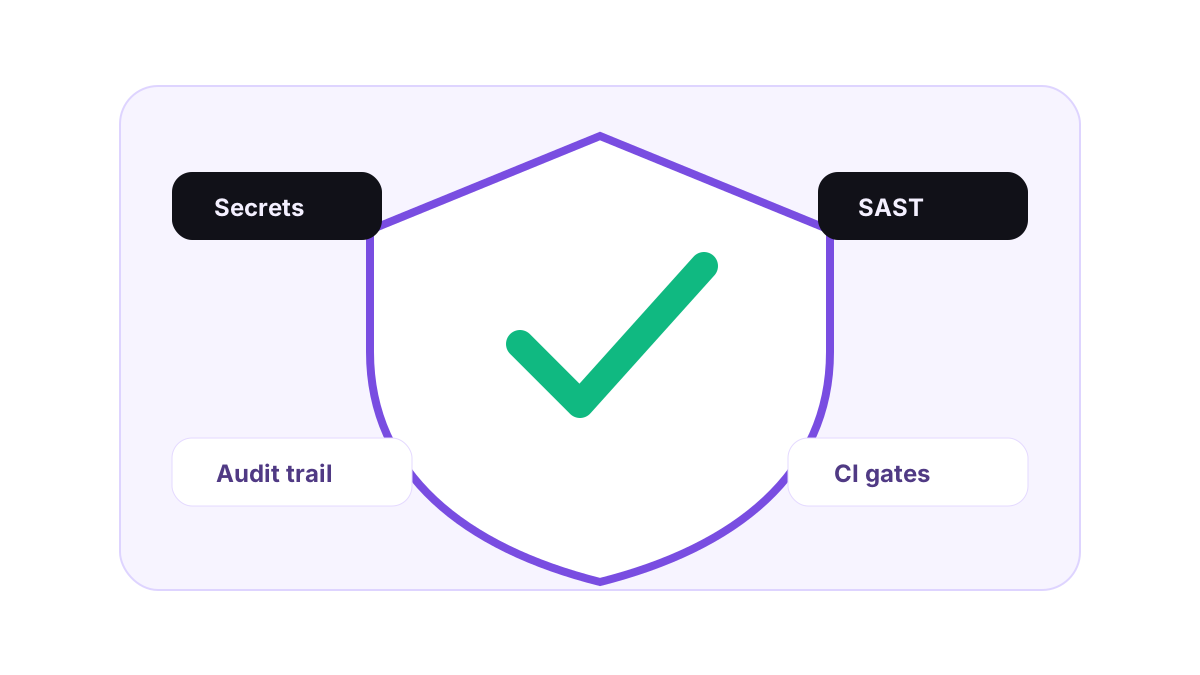
Security teams do not need another place where generated code appears without context. They need an auditable path from request to patch to scan to approval. That is especially true as AI coding agents gain the ability to modify files, create branches, run commands, and propose merges.
Reports from security vendors such as Veracode’s State of Software Security and platform research from GitLab continue to emphasize that code generation and developer velocity have to be paired with governance and security review. The practical takeaway is straightforward: AI output needs the same or stronger evidence path as human-written code.
The risk is not “AI wrote code”
The risk is unreviewed code entering production without enough context. AI-generated code can be useful, but it can also miss project conventions, use outdated patterns, introduce vulnerable dependencies, or make a change that looks correct in isolation and wrong in the system.
A secure workflow asks for evidence:
- What task or issue caused this branch?
- What files changed?
- Which agent or user initiated the action?
- Were secrets or tokens involved?
- Which scanners ran?
- Which findings were accepted, fixed, or waived?
- Who approved the final merge?
GitGhost makes the evidence path visible
GitGhost connects agent sessions to the software delivery workflow. A team can review code, but also inspect the surrounding signals: transcript, checkpoint, branch, requested action, scan result, pipeline run, and merge request.
This matters because security work is often fragmented. Secret scanning may live in one place, dependency audit in another, CI logs elsewhere, and the AI conversation in a private chat. GitGhost is designed to bring those signals into the project where reviewers already make merge decisions.
Policy before permission
AI agents should not receive unlimited write access just because they are useful. Teams need project-level policy: which agents can connect, what scopes they receive, when they can write, and when a human must approve an action.
GitGhost’s agent policy direction is built around this idea. A local coding agent can be connected through the GitGhost CLI, but the project policy controls whether local agent sync is allowed and what the agent can do. That turns agent access into a reviewable project setting instead of a personal workaround.
Security for AI coding is a workflow problem: permission, evidence, and review have to stay connected.
From scanner output to merge confidence
Scanners alone are not enough. Teams need to know which scanner ran against which code, how findings changed, and whether a merge request should be blocked or allowed. GitGhost’s security workflow is built to keep those results close to the branch and project activity.
The result is a safer operating model for AI-assisted development: let agents help, but keep security gates visible and enforceable. That is how teams can move faster without turning generated code into a blind spot.