
AI coding assistants can generate code faster than most teams can review it. That is the hidden bottleneck in agent adoption. The constraint is not only the model. It is the team’s ability to understand, verify, and safely merge the output.
GitLab’s AI in software development research has repeatedly pointed at the importance of governance, review, and organizational readiness around AI-generated code. Google Cloud’s DORA program also frames software delivery performance as a system, not as a single tool. That matters because generated code still has to pass through a human and operational system before it becomes production software.
Code review becomes harder when context is missing
Reviewers are already balancing correctness, maintainability, security, product fit, and delivery pressure. AI-generated changes add new questions:
- Was the task understood correctly?
- Did the agent change files outside the intended scope?
- Did it run tests or only produce a patch?
- Were secrets, credentials, or private APIs exposed?
- Did the generated branch pass the project’s security gates?
If the only artifact is a diff, the reviewer has to reverse-engineer the path that produced it. That increases review time and reduces confidence.
Evidence should travel with the merge request
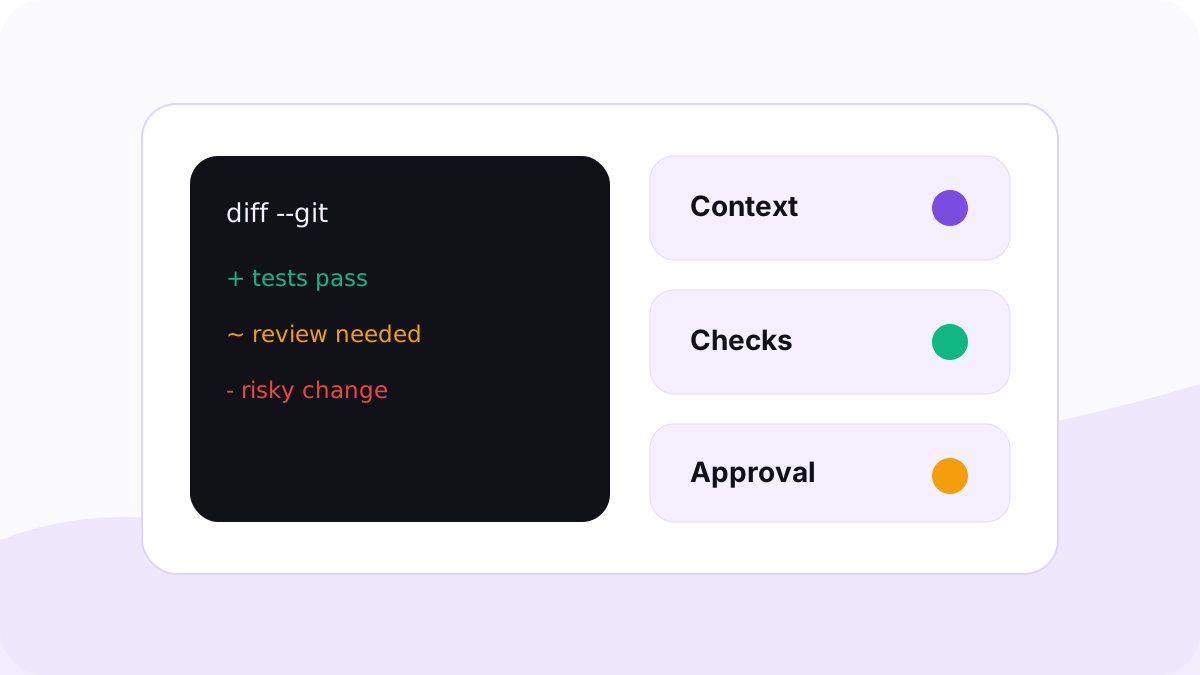
GitGhost is built around the idea that the evidence behind a change should live beside the change. The agent session, branch, prompt context, requested actions, approvals, security scans, pipeline results, and merge request should be connected.
This does not replace human review. It gives reviewers a better starting point. A reviewer should be able to ask: “What did the agent do, what did the project allow, what checks ran, and what still needs my judgment?”
The best AI delivery workflow is not automatic merging. It is better review input.
How GitGhost reduces review friction
GitGhost helps teams create a structured path from agent work to merged work:
- Agent sessions: local and cloud coding sessions can be represented as project activity instead of disappearing into a private terminal.
- Policies: teams can decide which actions need approval before an agent proceeds.
- Security checks: scanners such as SAST, dependency audit, secret scanning, and container scanning can attach results to the project workflow.
- Pipeline evidence: build and test outcomes stay visible with the branch and merge request.
- Project history: the team keeps a durable record of what changed and why.
Review should be a product experience
Review is not just a Git operation. It is a decision workflow. If AI accelerates branch creation, the product experience around review needs to become sharper: clearer context, less hunting, fewer disconnected screens, and stronger defaults.
That is why GitGhost combines Git hosting primitives with AI activity, approvals, security, and CI evidence. The platform is designed so generated work can move fast without forcing reviewers to guess what happened.