
Developers already have favorite tools. Some want Claude Code in the terminal. Some prefer Codex, Gemini, Cursor, OpenCode, or a custom internal agent. A platform for AI software delivery should not force every developer into one assistant. It should make the work from those assistants visible, governed, and connected to the project.
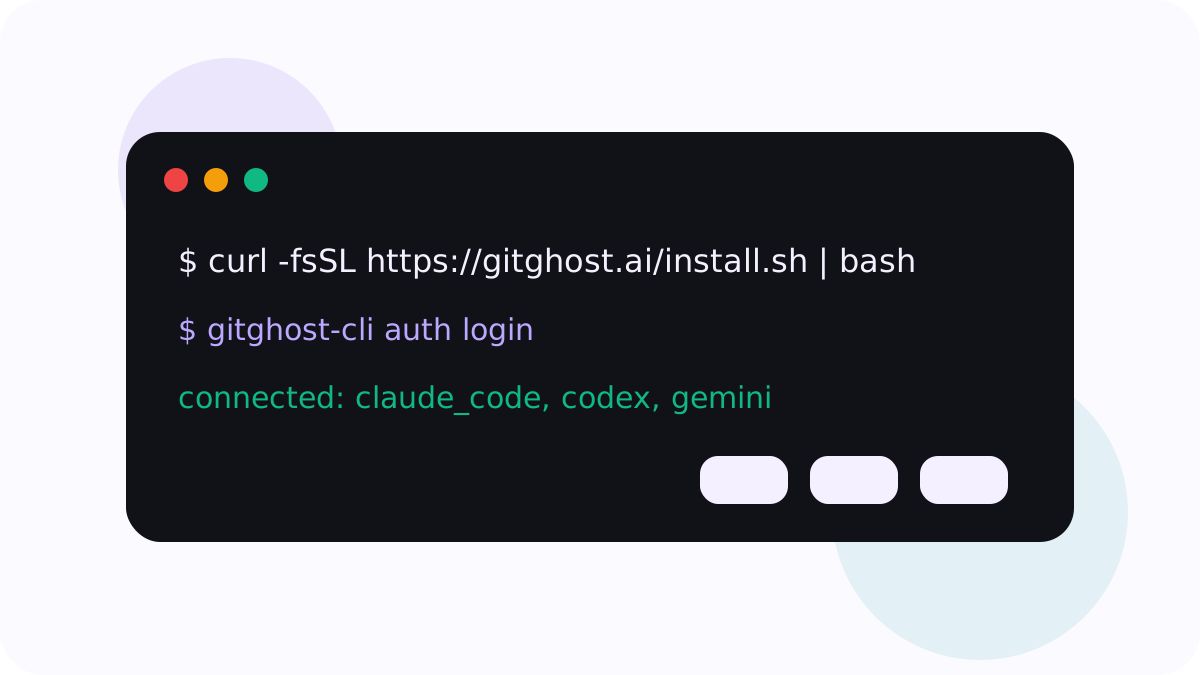
That is the role of the GitGhost CLI. Install it once, sign in, and connect your local coding agent to a GitGhost project:
curl -fsSL https://gitghost.ai/install.sh | bash
gitghost-cli auth login
The problem with local-only agent work
Local coding agents are powerful because they are close to the developer’s real workspace. They can read files, propose patches, run commands, and iterate quickly. But local-only work also creates gaps for the team:
- The agent session may not be visible to reviewers.
- The prompt and plan may be separated from the merge request.
- Approvals may happen informally.
- Security and CI evidence may not be attached to the original work context.
GitGhost is designed so the developer can keep the local experience while the project keeps the delivery record.
How the connection flow works
A user signs into GitGhost CLI, opens a project in GitGhost, and generates a local-agent connect code from the AI chat or agent work rail. The CLI exchanges that code for a project-scoped token. From there, the agent can report session activity back to GitGhost according to project policy.
gitghost-cli agent connect --agent claude_code --code <connect-code>The connect code is not the same as the device login code. The device login code authenticates the CLI user. The connect code links an agent session to a specific project with the scopes the project allows.
Why this matters for teams
When a local agent becomes part of the project workflow, teams can review more than the final diff. They can see the session, branch, files touched, approvals requested, security checks, and pipeline results. That is what turns local agent productivity into auditable delivery.
For developers, GitGhost should feel like a light bridge: keep using the agent that helps you move. For teams, it should feel like a control surface: understand what happened, enforce policy, and merge with confidence.
The path forward
AI coding is becoming plural. Teams will not use one model, one editor, or one workflow forever. GitGhost is being built for that reality: local and cloud agents, one project surface, and a delivery process that keeps humans in control.